


Site map
Update
5 Sep 2024


More
|
See first the introduction on page 1.
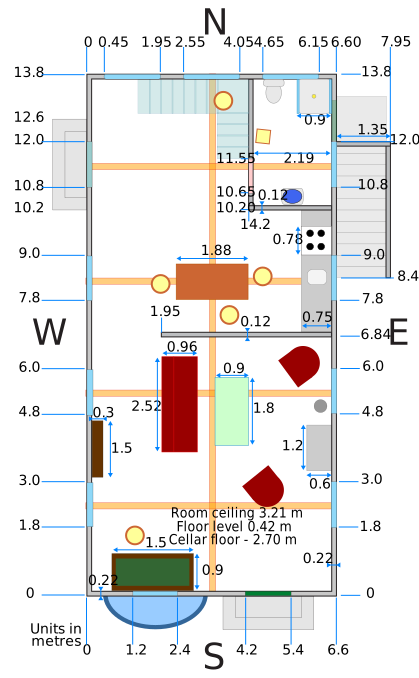 Everything is defined geometrically, except the paintings on the walls and the tapestry. There are 16 source files totalling about 350 kB of text to describe the house, its environment and the furniture, including 12 kB for the tree adapted from Jean-Laurent Pradel, and 20 kB for the sea plane borrowed from Kurt Bangert, which is shown in different positions. Here are the specifications of the B314.
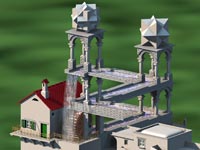
Moving the "camera" around and into the house demonstrates that it is indeed a geometric object and not a series of drawings. I only vary the position of the camera, and the lighting, to get all the images (today, 47 pictures inside and outside). I also occasionally move around the balloon, the plane, the ship, and the seagulls, and adjust the weather fane. There are seven different skies to refect different weather conditions. I have changed the environment in August 2007 and again in July 2013, and the island landscape is now somewhat more realistic. I adjust 20 parameters to render the different views (point of view, lighting, sky, positions of the ship, plane, and balloon). I designed the pavement with individually random-coloured cobblestones, and added in 2017 the wind turbine and the stairs going down to the plane. In some of the outdoor pictures, there is a little amount of fog, so that the distant objects are not as clear as the close ones. I am not completely satisfied with the results, and hope to do better at a later stage. The POV program is very powerful, and quite complicated to learn. There are hundreds of commands to adjust light, colours, textures, reflection, refraction, and everything is hard coding. Clicking on the close-up of the roof, you will see the arrangement of the tiles, courtesy of Sascha Ledinsky. I would never have found the complicated algorithm used for this purpose but I improved it and learnt from it to make the pavement around the house. I designed the lighthouse based on a file by Jean-Louis Saquet using the phare de Sète (South of France) as a model: here the original. 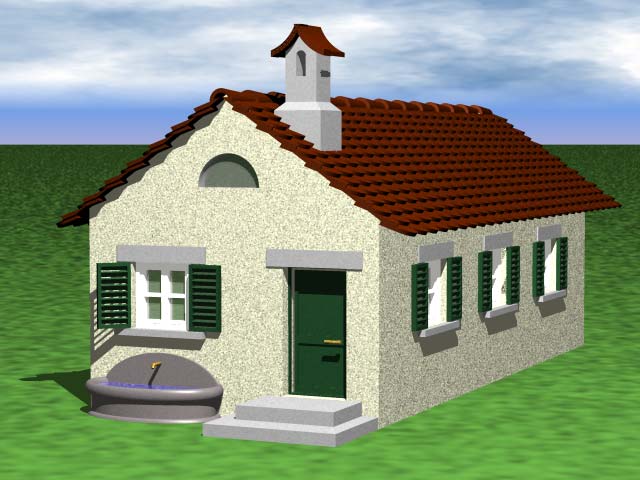 On the left you see the first version of this house, made in August 2005. It had no landscape, was smaller, and empty. The door opened on the wrong side, too... Today, there are over 80 items in and around the house. I created most of them, but I also borrowed and modified several objects from files made available by the community of POV ray tracers. See the corresponding acknowledgements. On the left you see the first version of this house, made in August 2005. It had no landscape, was smaller, and empty. The door opened on the wrong side, too... Today, there are over 80 items in and around the house. I created most of them, but I also borrowed and modified several objects from files made available by the community of POV ray tracers. See the corresponding acknowledgements.
I started ray-tracing around 1993 with DKB (by Eduardo Schwan), the ancestor of POV. I improved my skills gradually, but there are many much better experts (see another page with examples). Several of the pictures made their way to my employer's first web pages, which I created early 1998. If anybody has comments or suggestions about these pictures, I will be delighted to read them. More information on the ray-tracing software and principles can be found in the POV site pages. See also my links page. |
||||
| Pictures open in a separate window. JavaScript is required for proper display. | ||||
 House (1280 x 960, 321 kB) |
 House at night (1280 x 960, 223 kB) |
|||
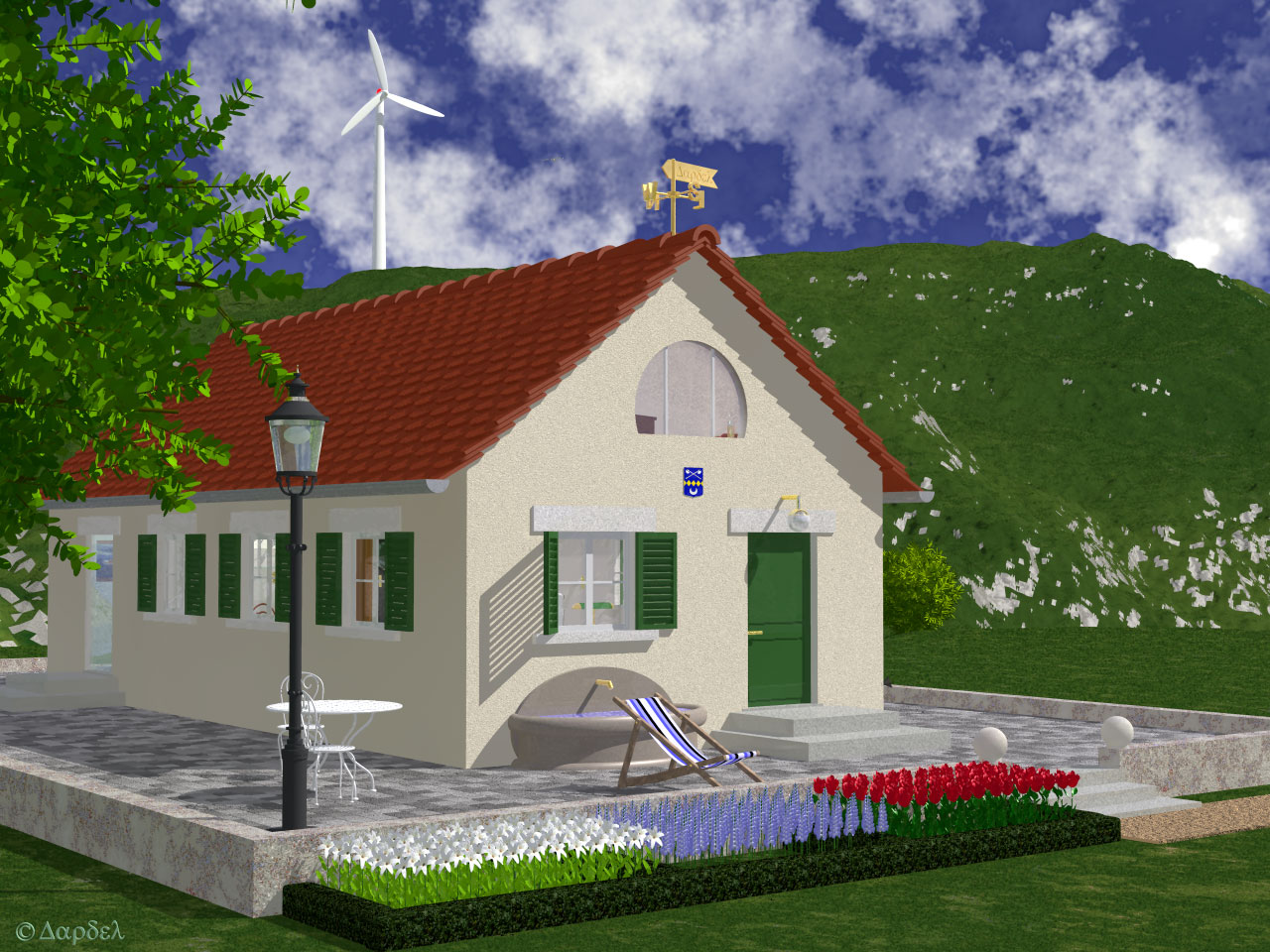 Another view (1280 x 960, 310 kB) |
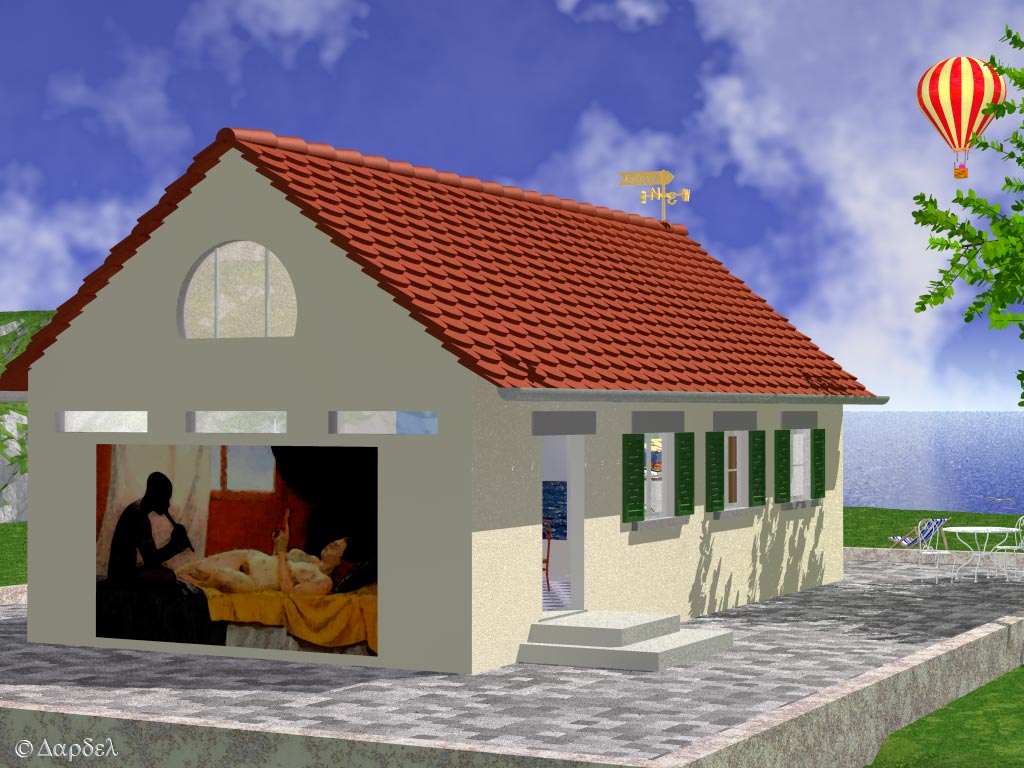 North end (1024 x 768, 127 kB) |
|||
 With my sea plane (1024 x 768, 196 kB) |
 Zoom on plane (1024 x 768, 119 kB) |
|||
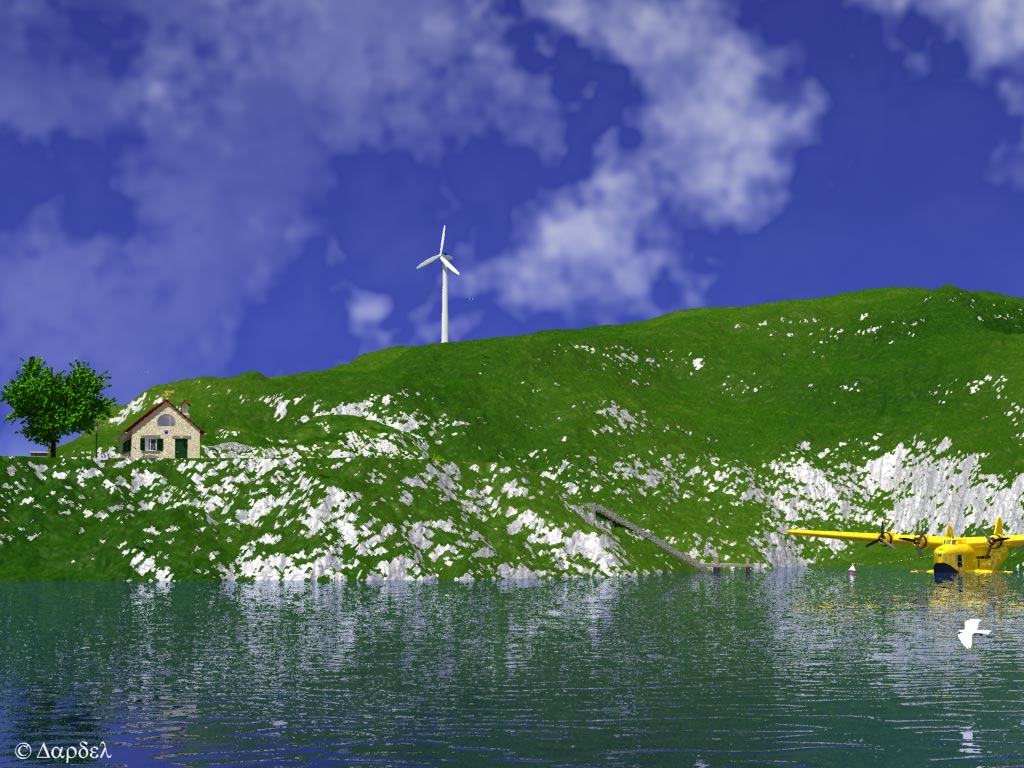 View from the sea (1024 x 768, 119 kB) |
 View from the South (1200 x 600, 91 kB) |
|||
 Situation (1024 x 768, 126 kB) |
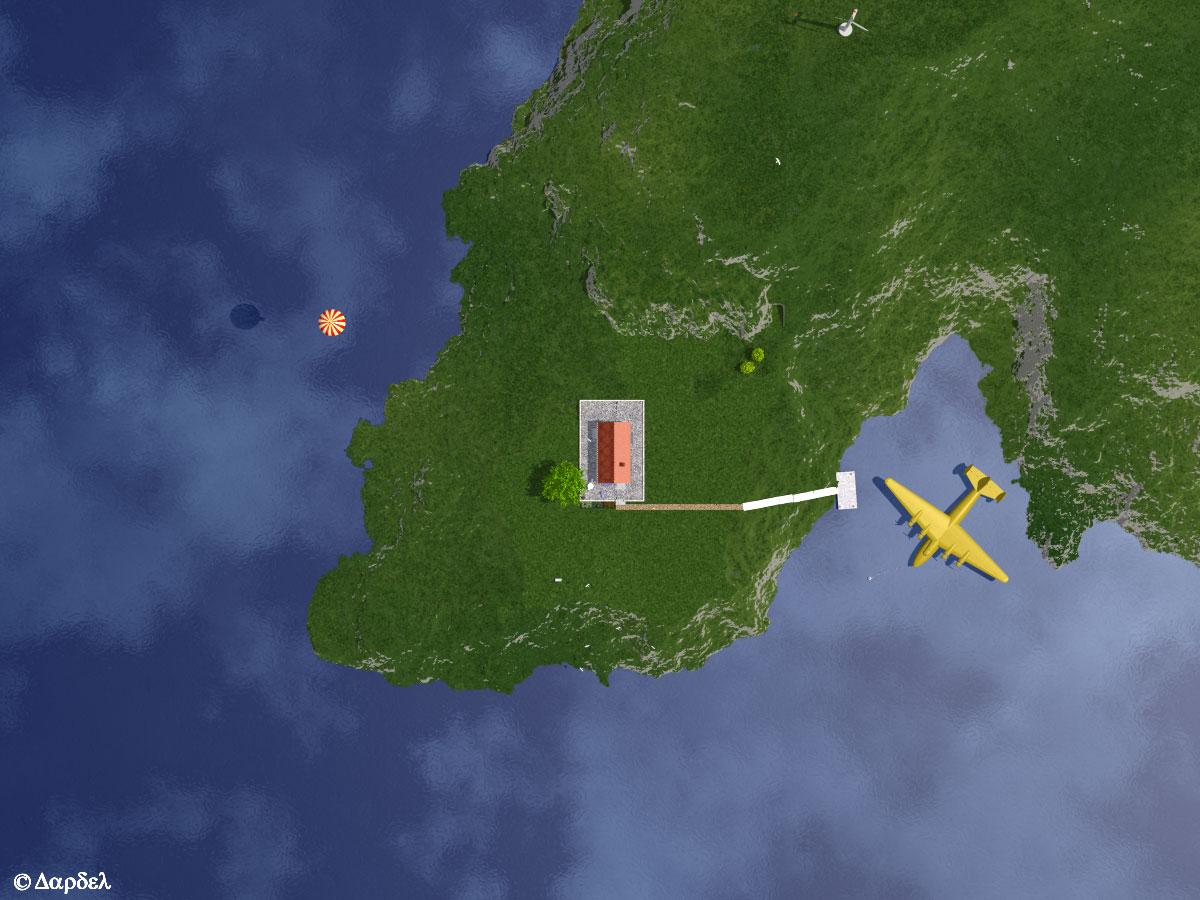 Birdseye view (1200 x 900, 173 kB) |
|||
 The roof (1024 x 768, 95 kB) |
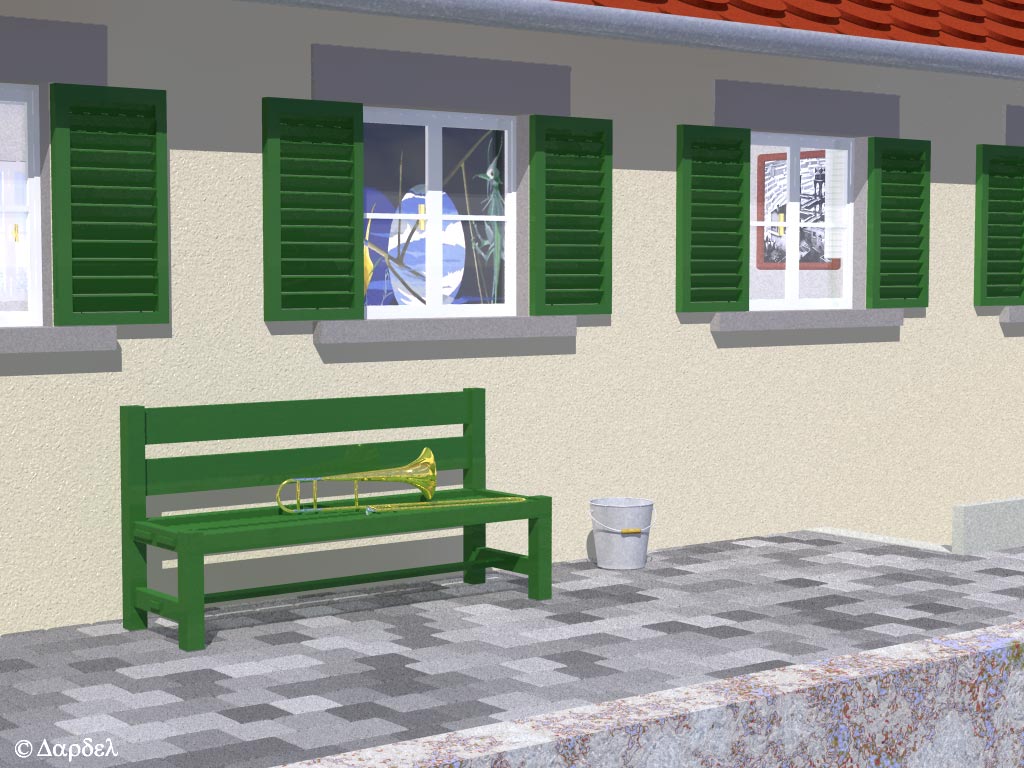 Detail (1024 x 768, 143 kB) |
|||
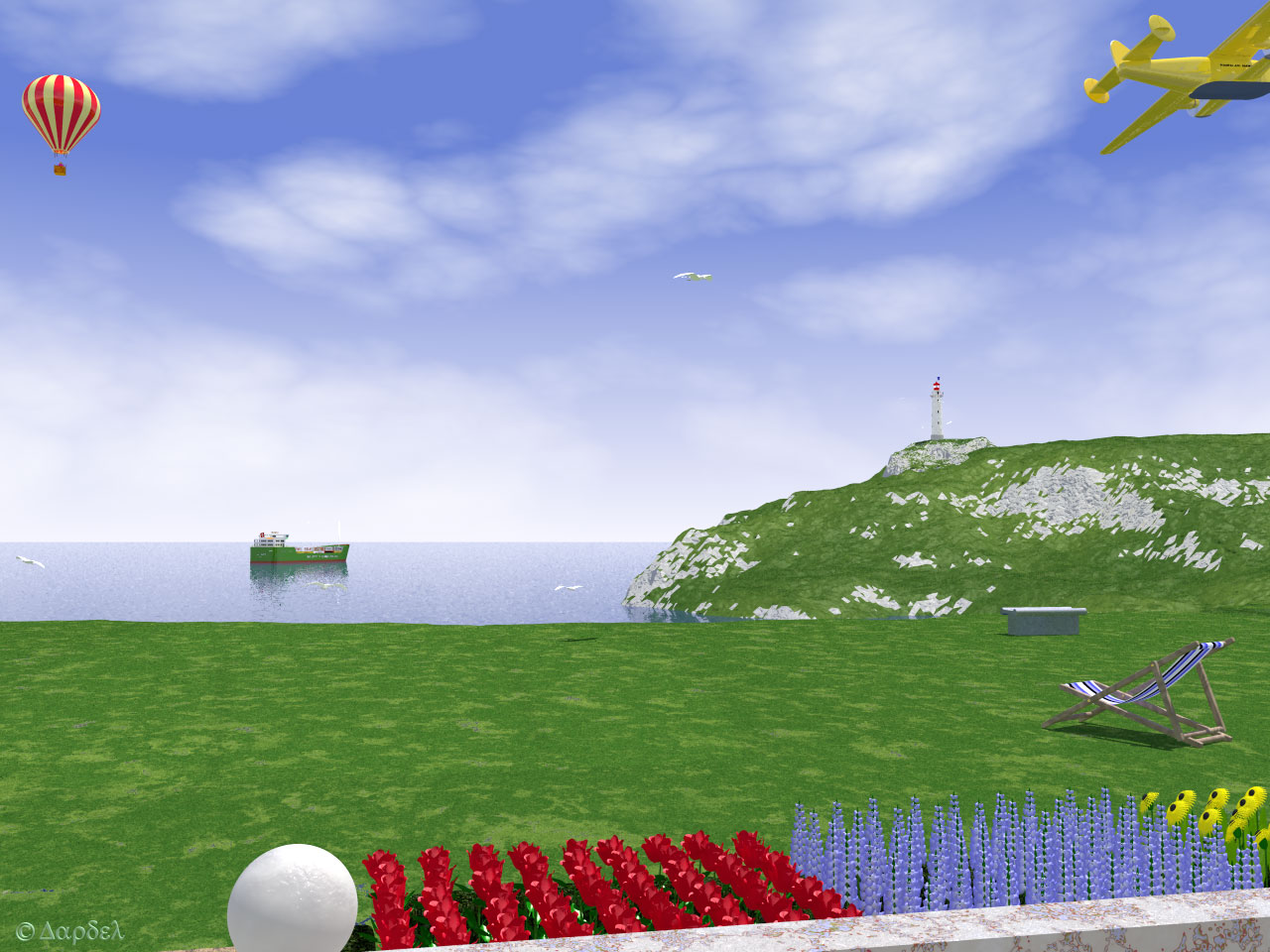 From the terrace (1280 x 960, 234 kB) |
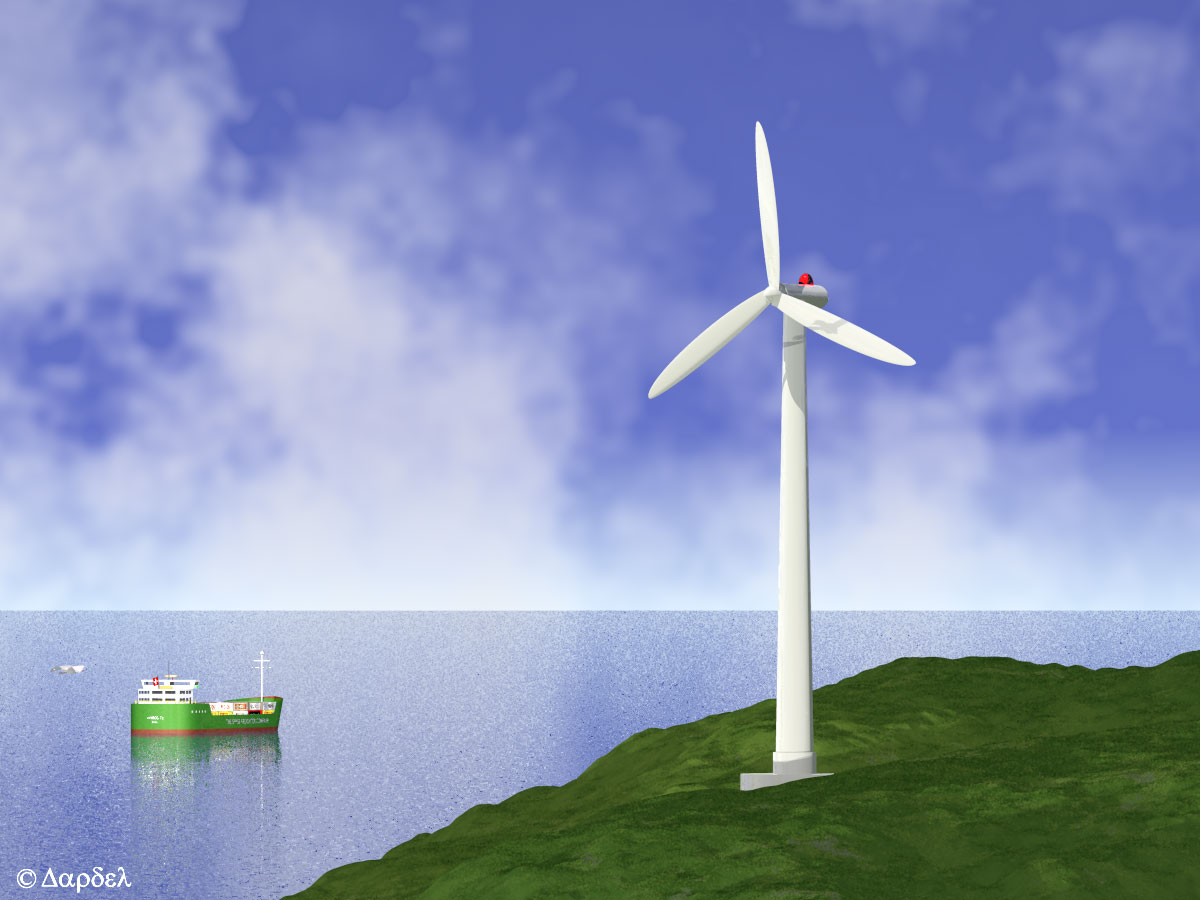 The wind turbine (1200 x 900, 120 kB) |
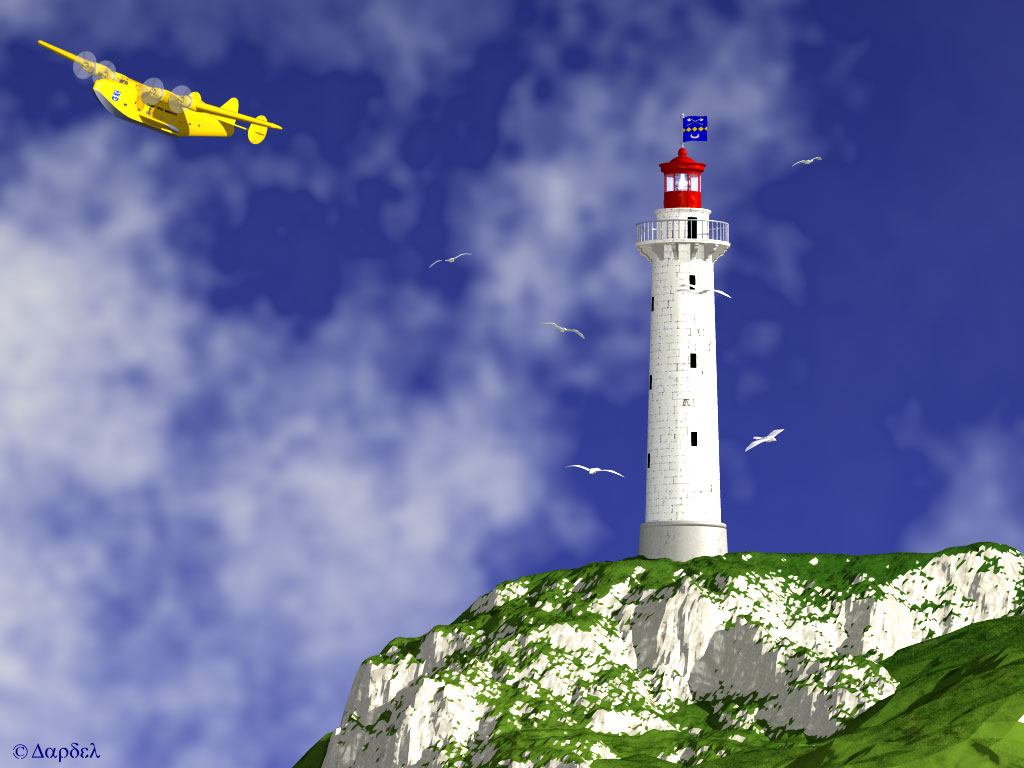 The lighthouse (1024 x 768, 120 kB) |
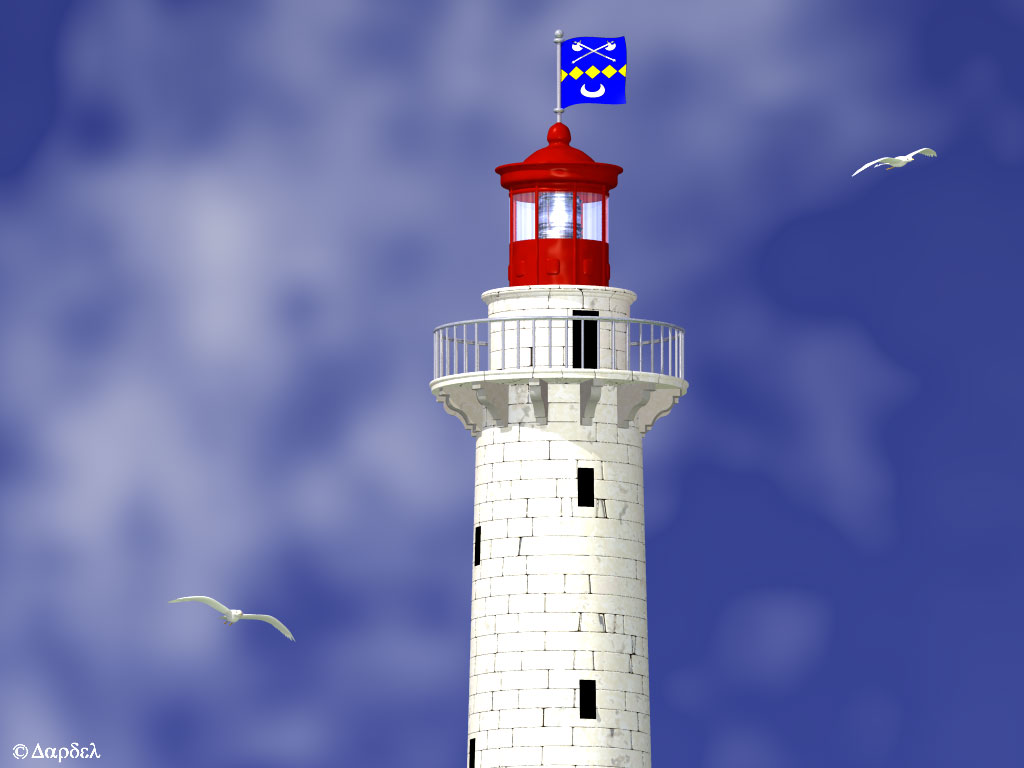 Lighthouse, zoomed (1024 x 768, 65 kB) |
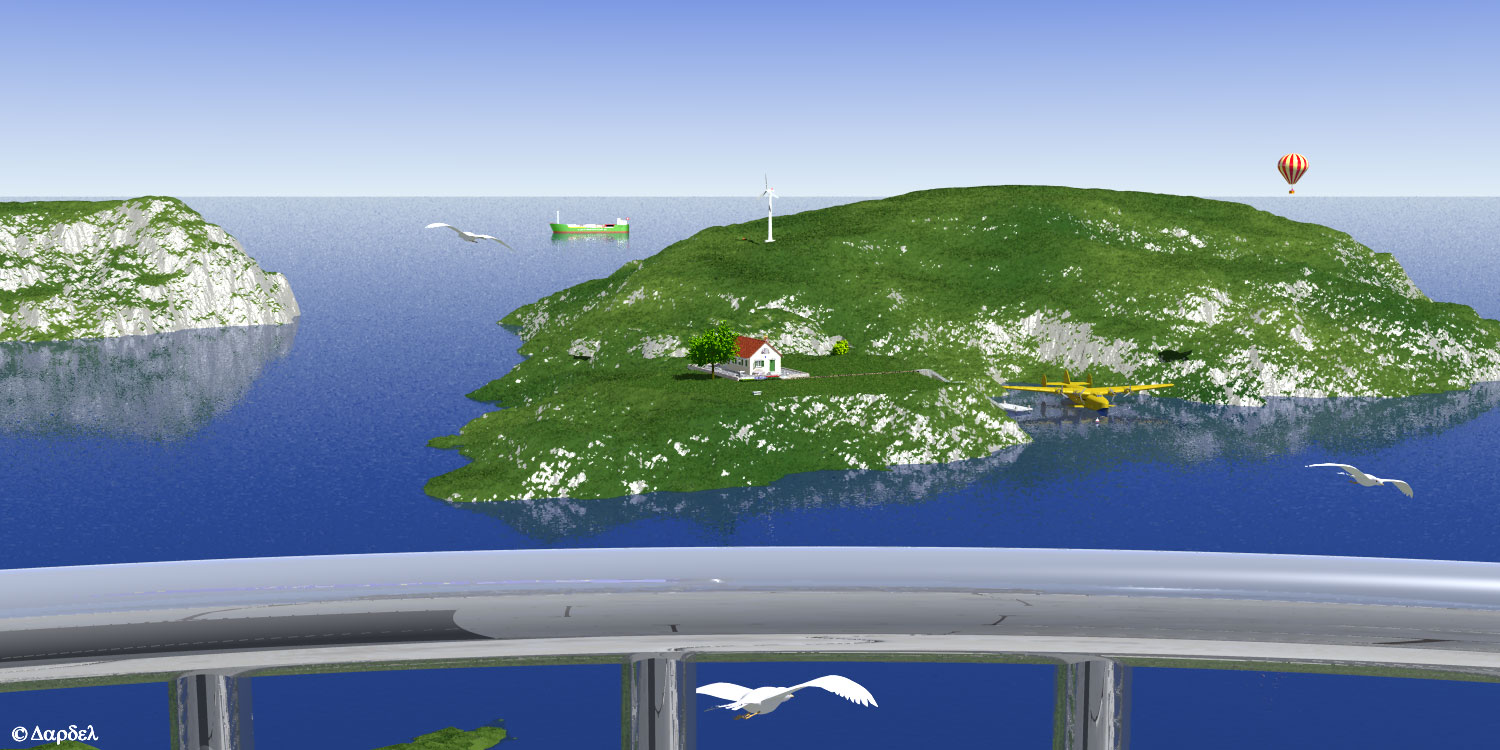 View from lighthouse (1500 x 750, 154 kB) |
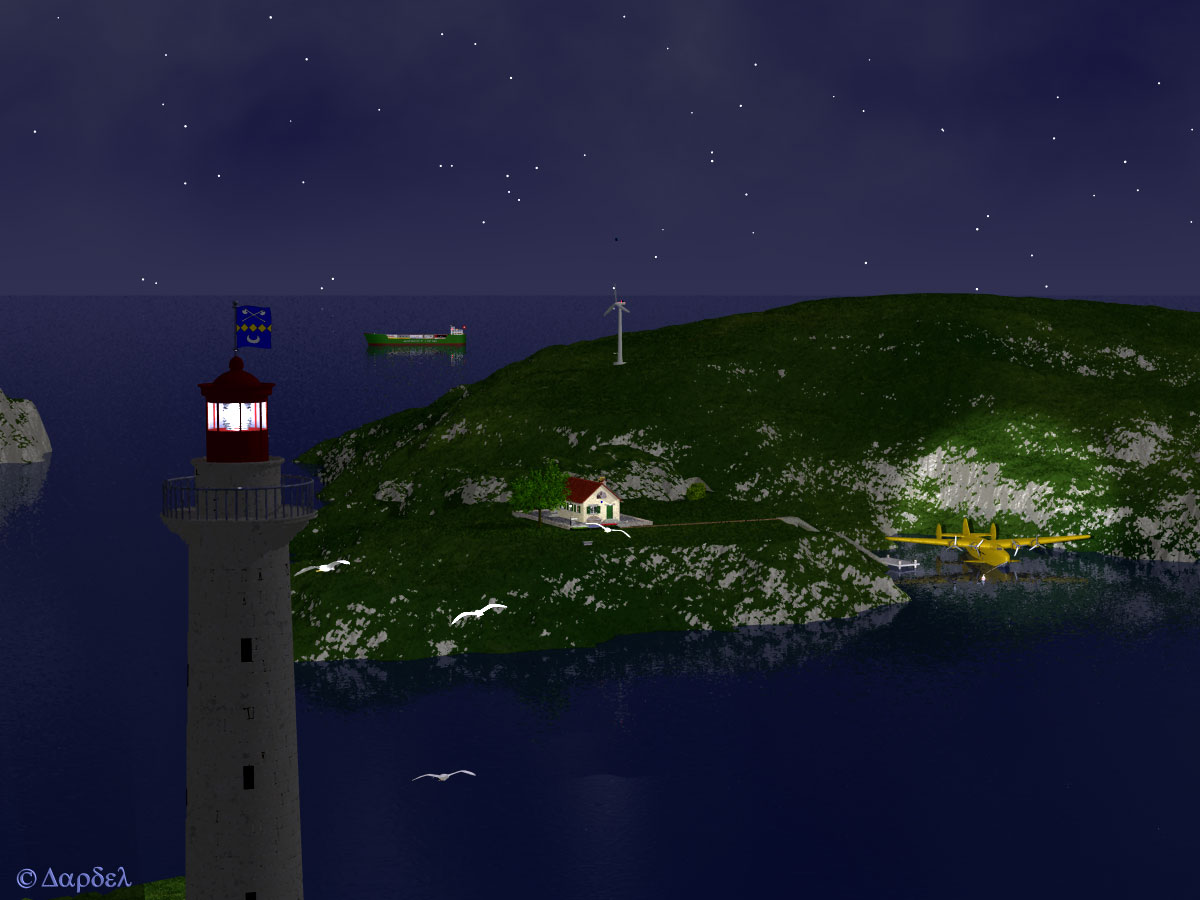 Lighthouse at night (1200 x 900, 121 kB) |
||||
| Inside the house | ||||
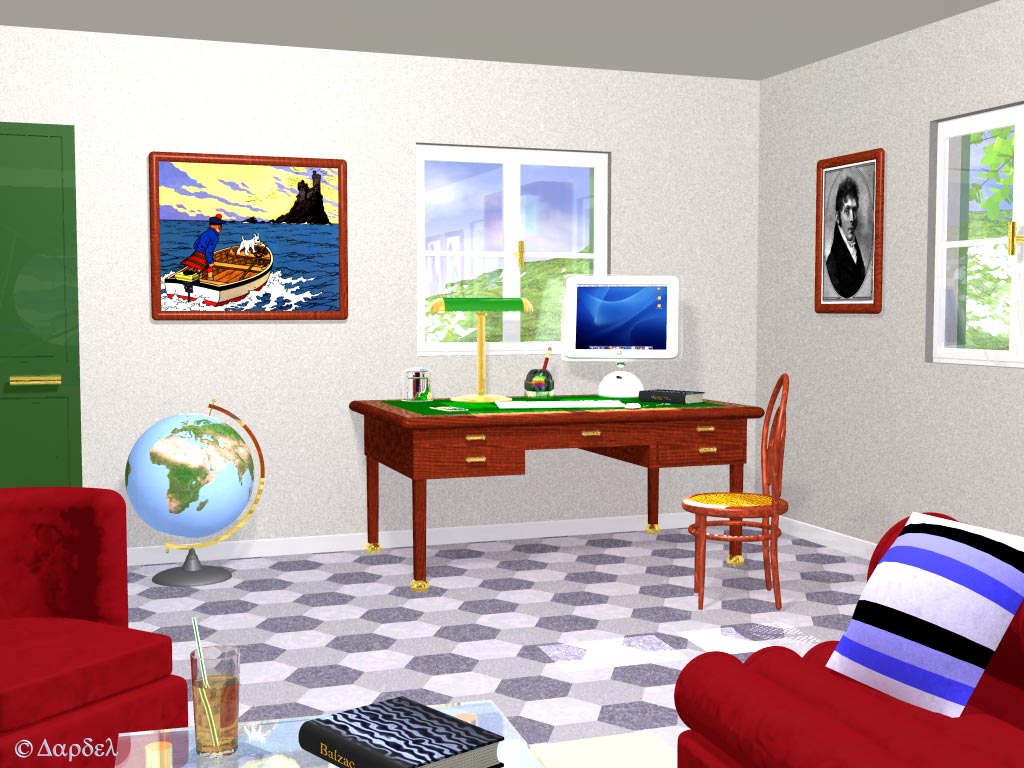 Inside (1024 x 768, 111 kB) |
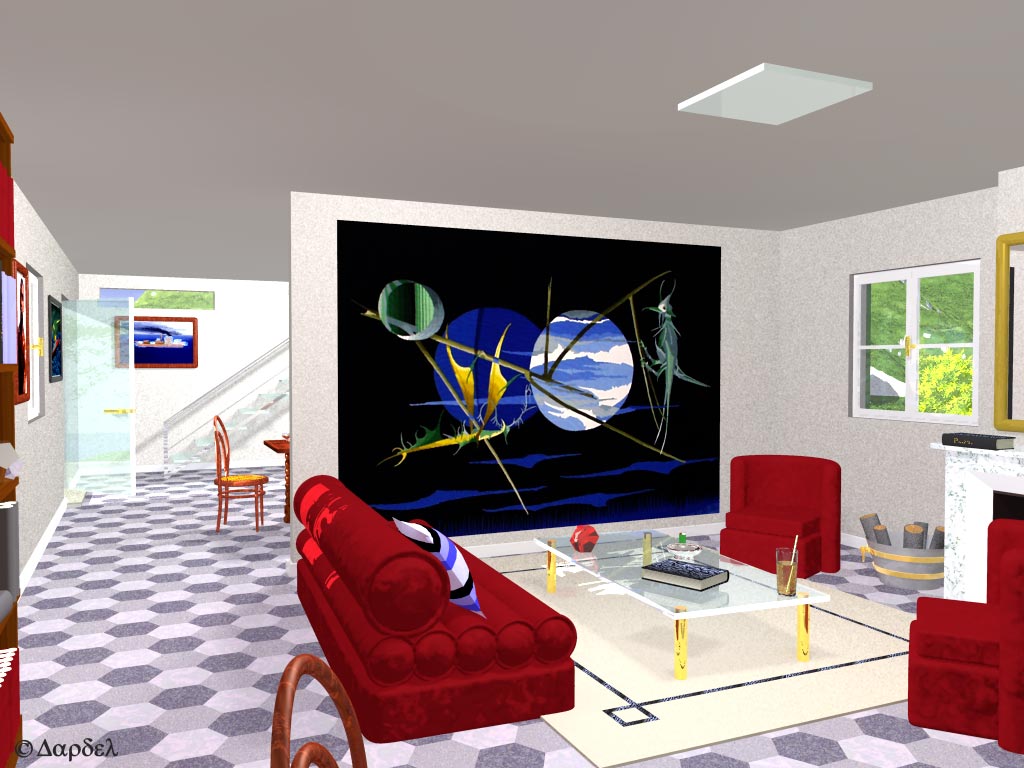 Inside, inversed (1024 x 768, 104 kB) |
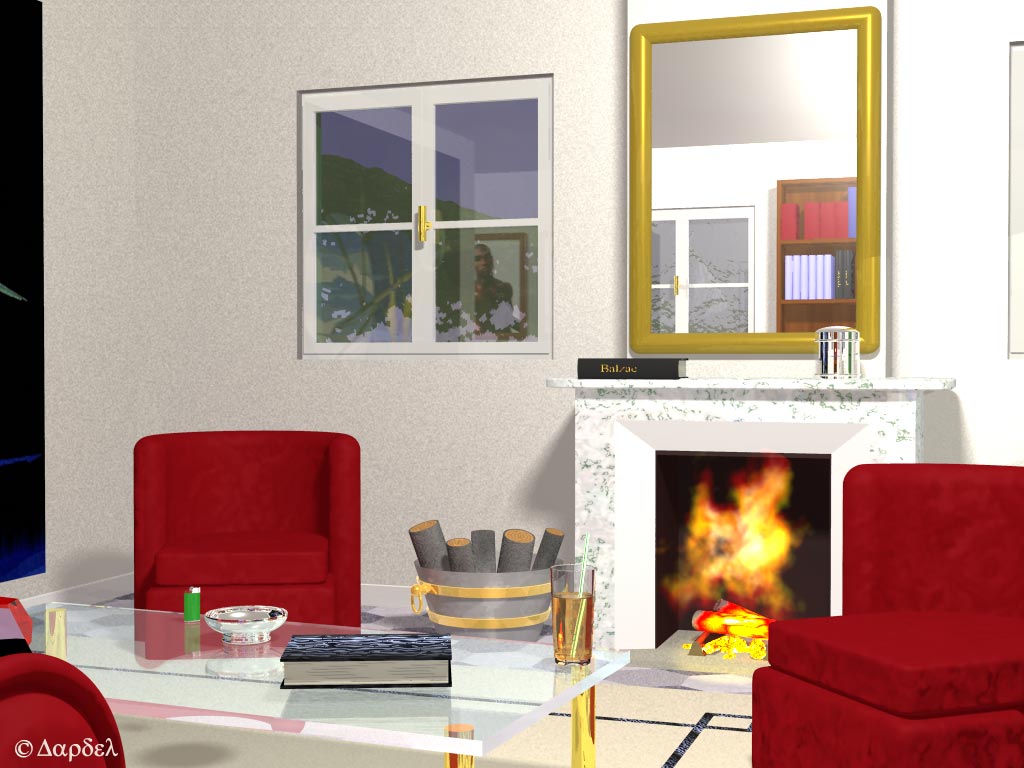 The fireplace (1024 x 768, 89 kB) |
 The glass table (1024 x 768, 80 kB) |
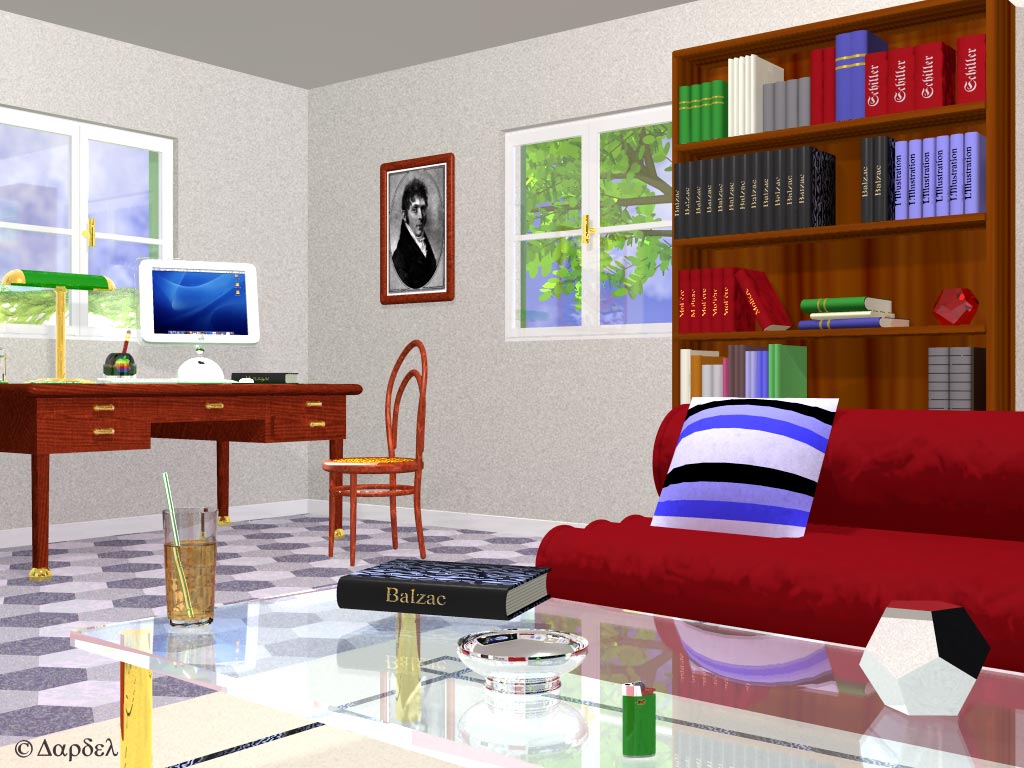 The book shelf (1024 x 768, 137 kB) |
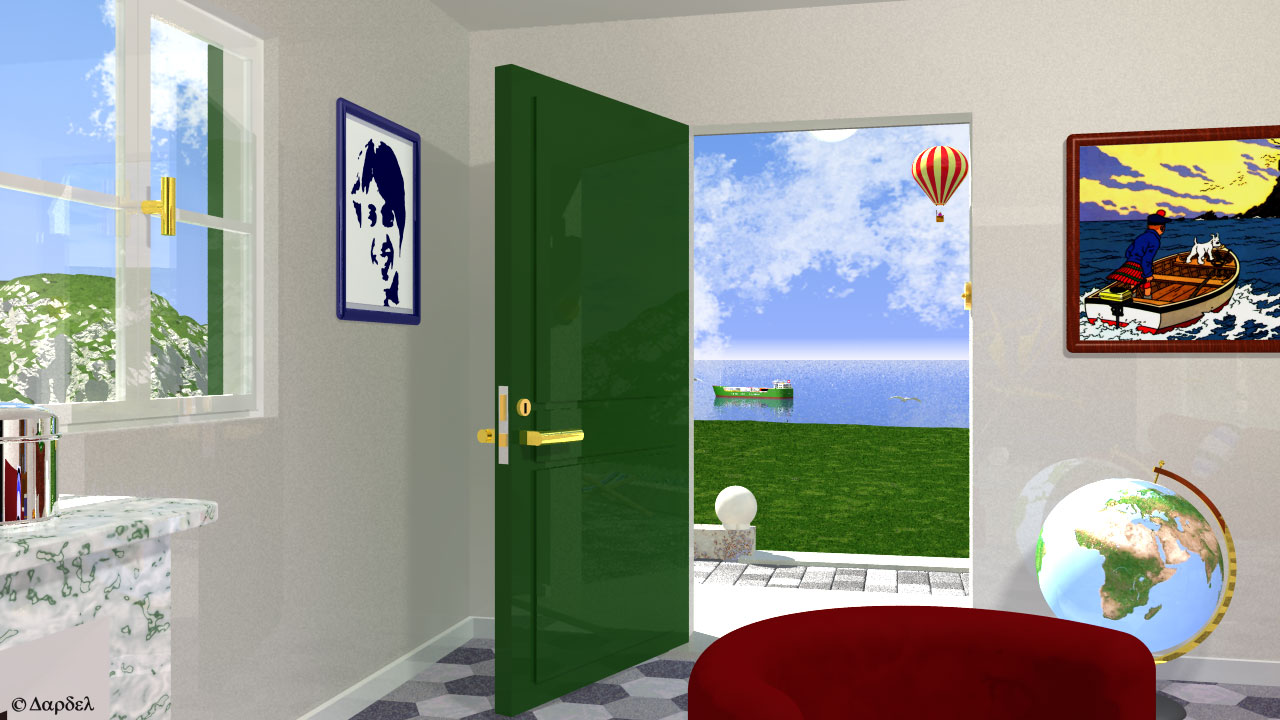 Inside out (1280 x 720, 186 kB) |
 Stairs (1024 x 768, 89 kB) |
 Inside, back (1024 x 768, 125 kB) |
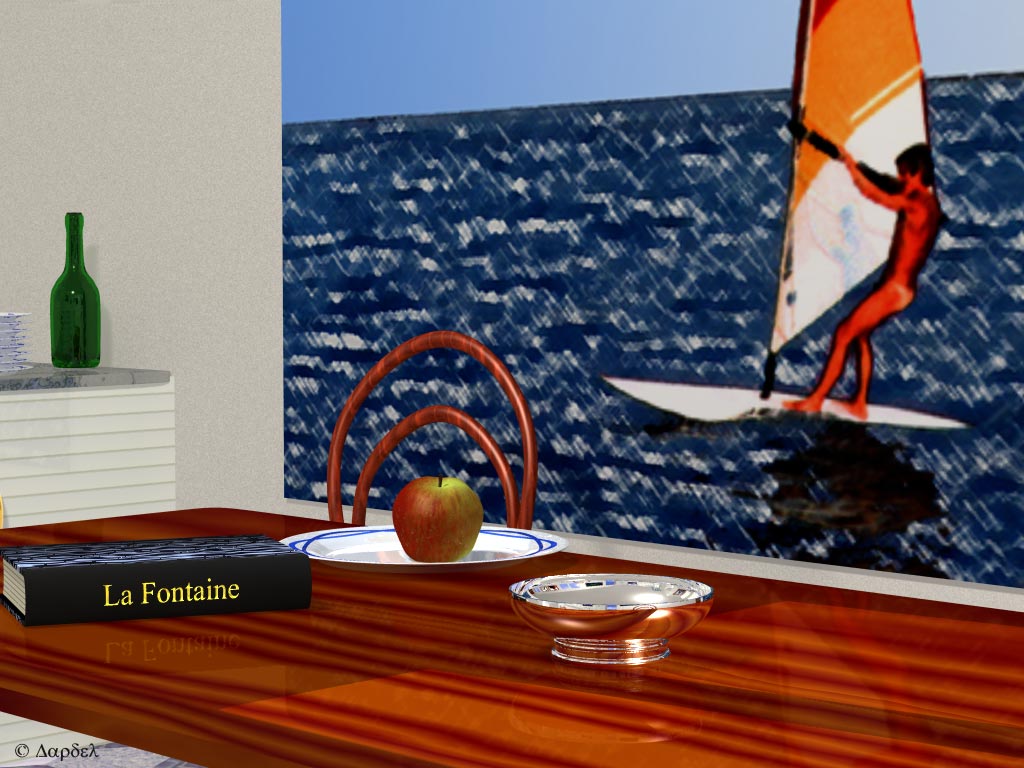 Zoom on table (1024 x 768, 121 kB) |
 The kitchen (1024 x 768, 104 kB) |
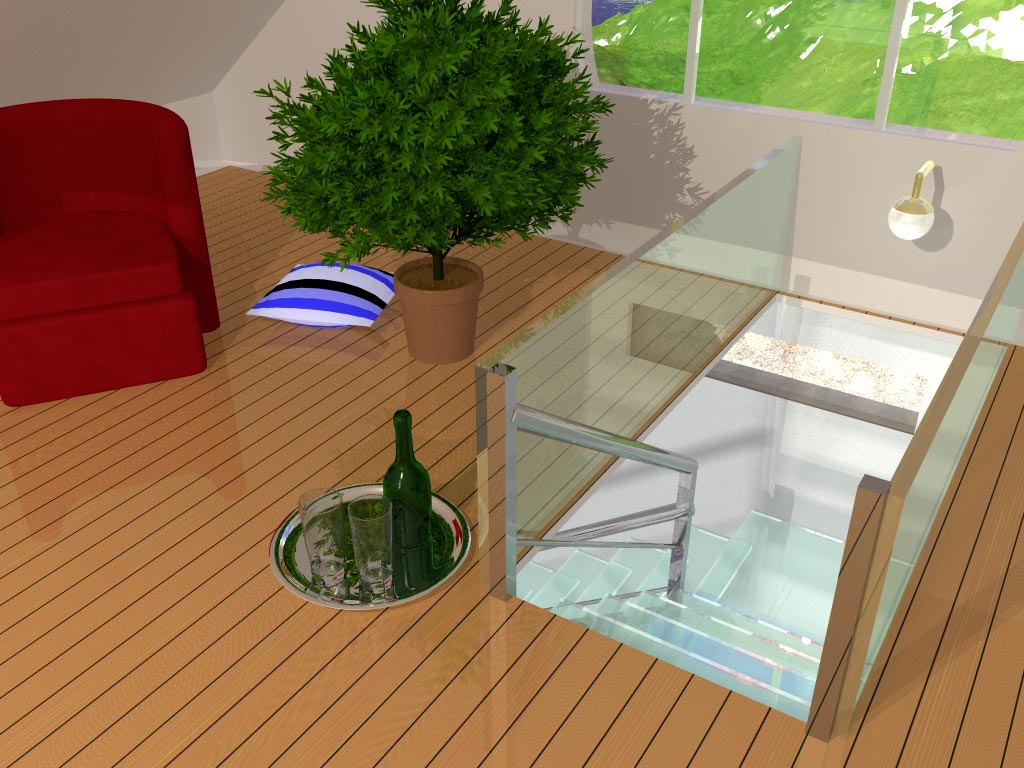 Staircase from the attic (1024 x 768, 134 kB) |
 The attic (1280 x 720, 200 kB) |
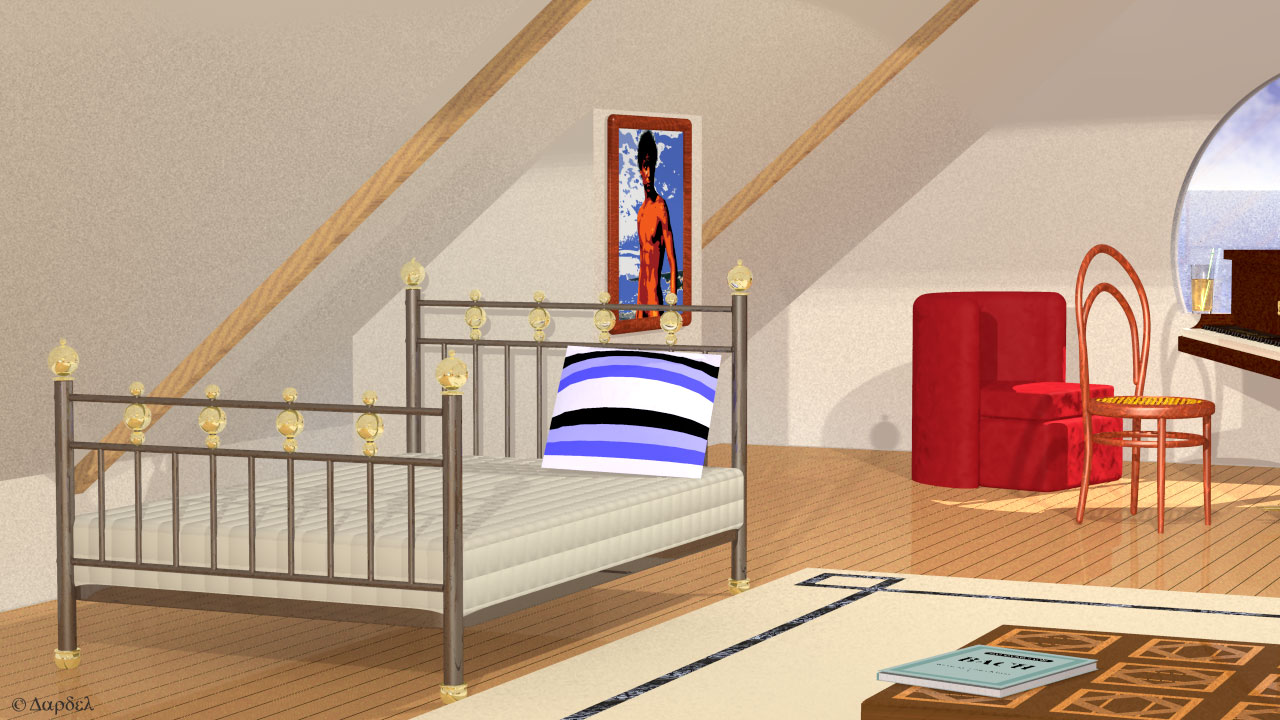 Iron bed (1280 x 720, 188 kB) |
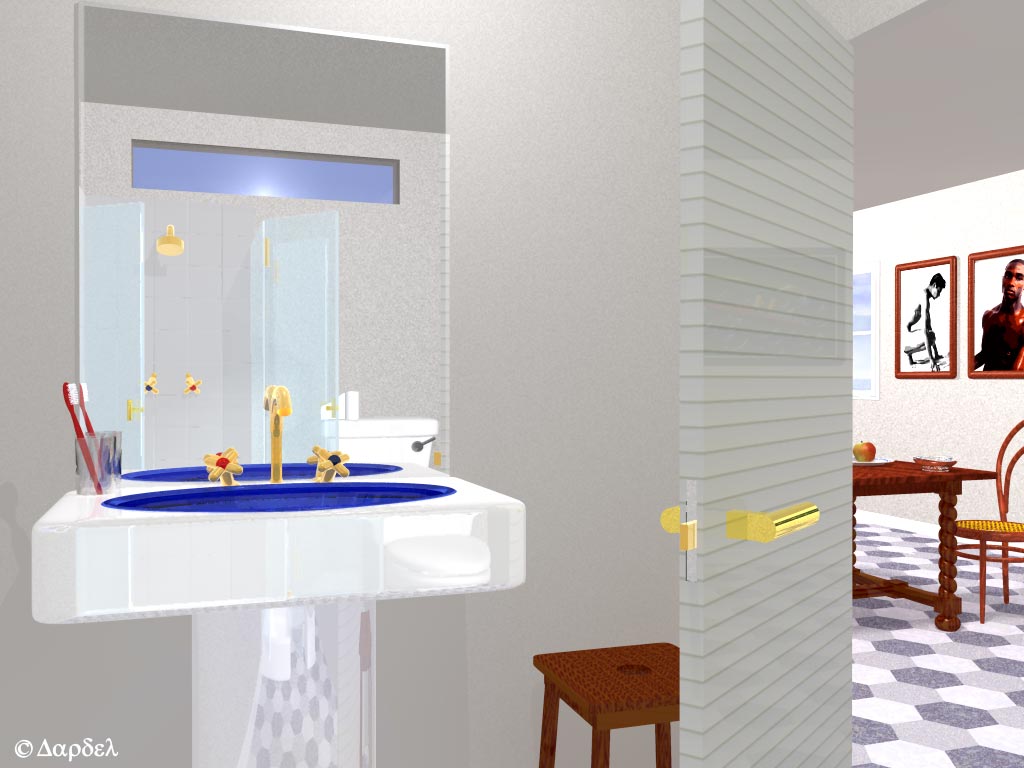 The bathroom (1024 x 768, 74 kB) |
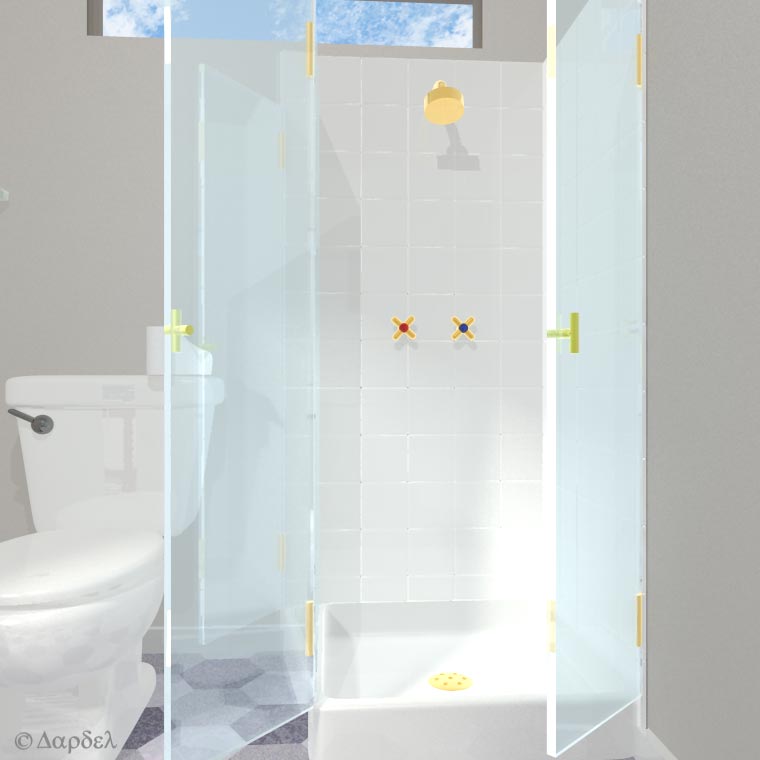 The shower (760 x 760, 30 kB) |
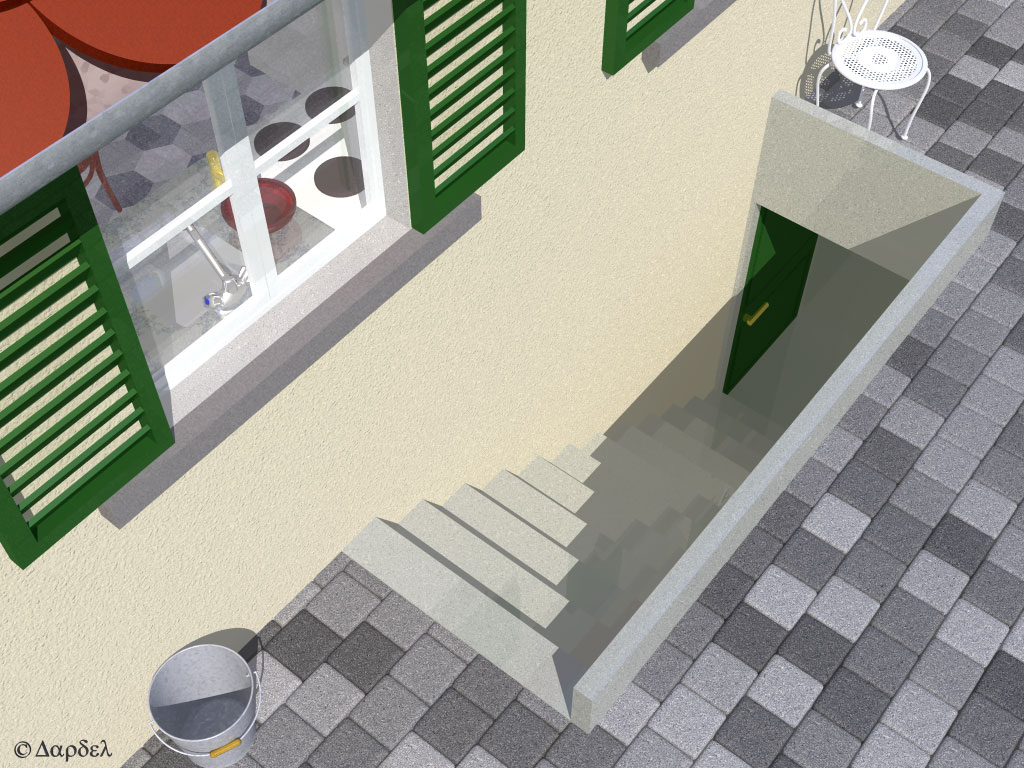 Down to the cellar (1024 x 768, 150 kB) |
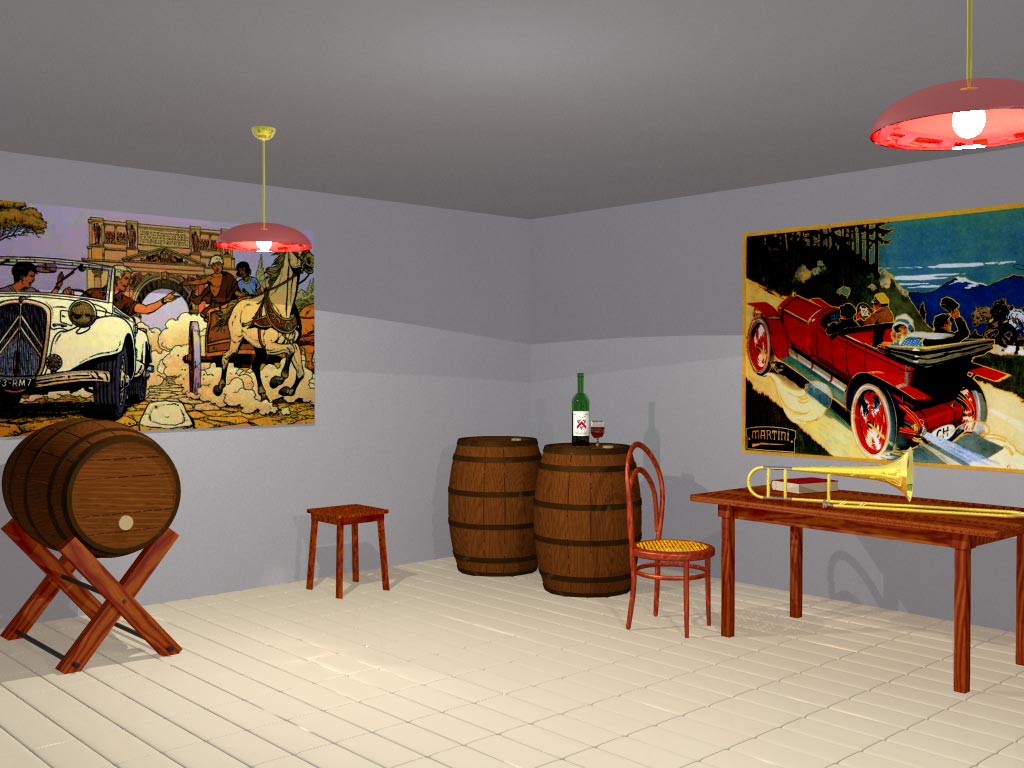 The cellar (1000 x 750, 108 kB) |
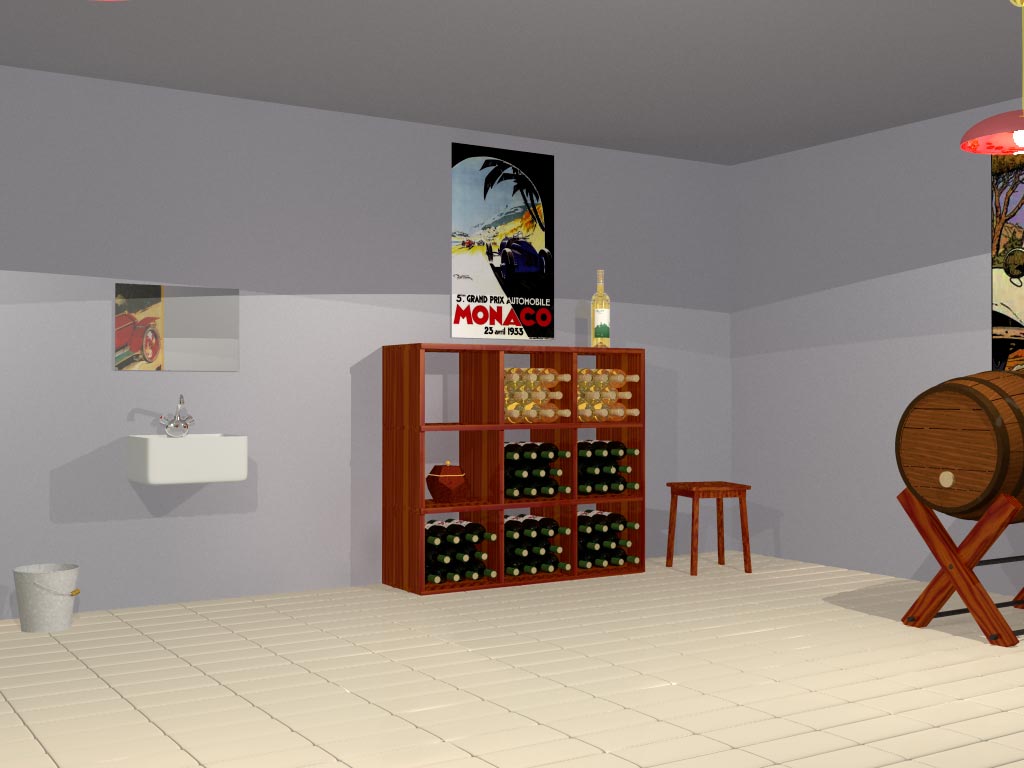 The cellar (1000 x 750, 125 kB) |
 The cellar (1000 x 750, 141 kB) |
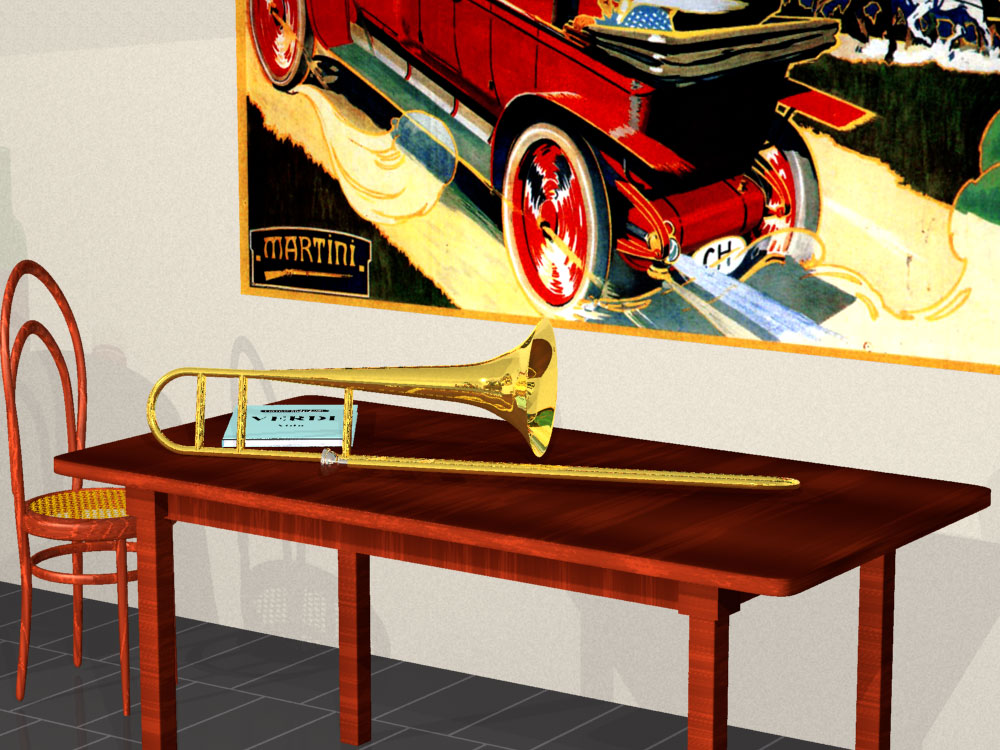 The trombone (1000 x 750, 224 kB) |
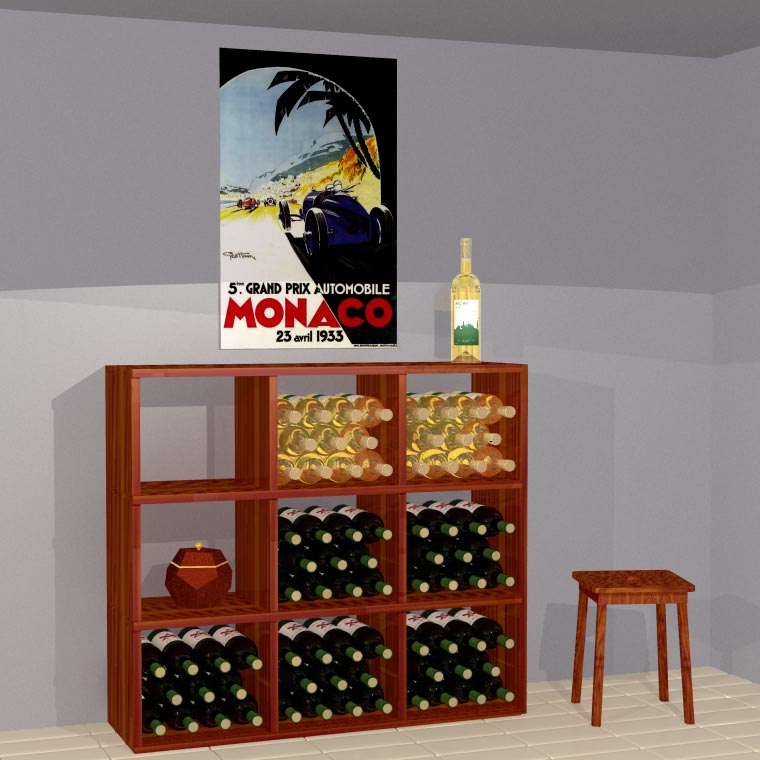 Wine storage (1000 x 750, 72 kB) |
||||
| Panoramic views | ||||
|
With POV Ray-Tracing, you can create a cylindrical or spherical panoramic view and then convert it to an interactive picture that you rotate to see under different angles. You can also zoom in and out. You can even see the panoramas with a "full screen" option. The paoramic pictures are created with another software (Pano2VR) from the POV original ray-traced image. I find the effect amazing. Click each small picture to open the panoramas in a new window and navigate using the symbols at the bottom of the picture. Use the "Fullscreen" option for a spectacular view. |
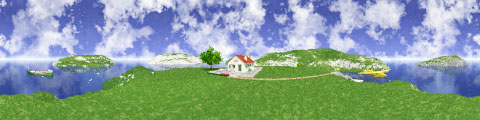 Outside (900 x 675, 3.9 MB) |
|||
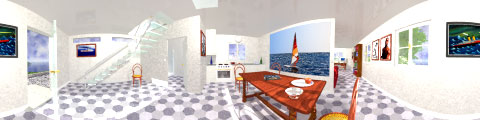 Inside (kitchen corner, 900 x 675, 3.2 MB) |
||||
 Spherical view (1000 x 700, 3.7 MB) |
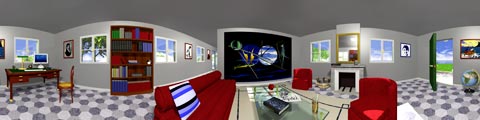 Inside (sitting room, 900 x 675, 3.9 MB) |
|||
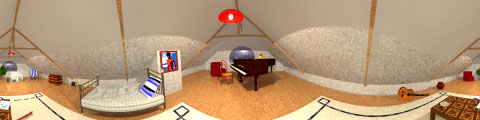 Attic (900 x 675, 4.0 MB) |
||||
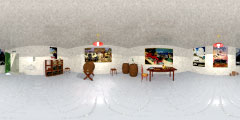 Spherical view (800 x 600, 3.7 MB) |
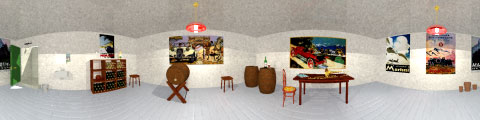 Cellar (900 x 675, 3.0 MB) |
|||
 |
My other pictures
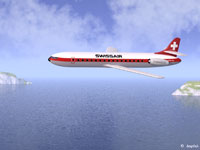
Several images I created with POV are shown in another page. |
 |
||
 |
Chemistry
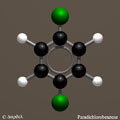
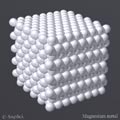
I also designed organic molecules (glucose, aspirin, caffeine, and more) and crystal structures in a second page. |
 | ||
 |
Pictures from others
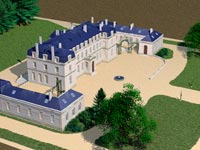
Finally, you can see excellent ray-traced images produced by other artists in a third page. |
 | ||
The music, if you have clicked on the icon at the top, is the song "O Solitude" by Henry Purcell (see my music page).


Guest book


